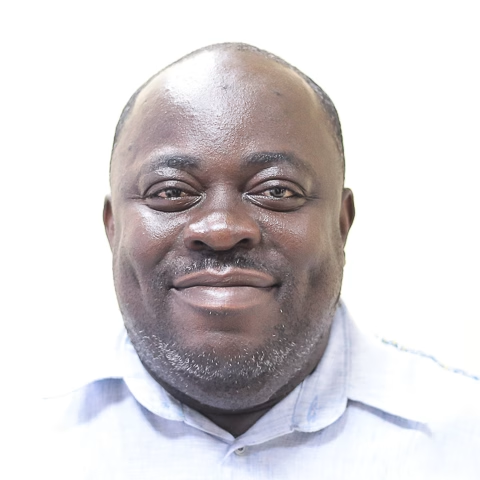
On behalf of the faculty, staff and students, I am delighted to welcome you to the Department of Agri-Food Systems and Technology (DAFST), School of Agriculture, University of Cape Coast.
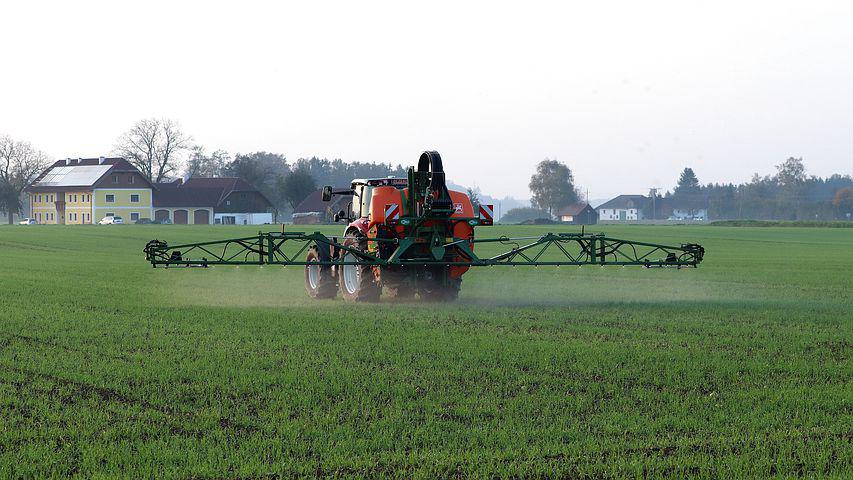
Our department, a vibrant academic community dedicated to excellence in teaching, research, innovation and community engagement was established to respond directly to one of the most pressing challenges facing Ghana and the wider region: how to move food safely, efficiently and sustainably from the farm to the table. We bring together expertise in food processing, post-harvest management, irrigation and water management and agricultural systems to train the next generation of professionals equipped to reduce food loss, add value to raw produce and strengthen food security across the food value chain. As agriculture continues to evolve in response to population growth, climate change, technological advancement and increasing demand for safe and nutritious food, our department remains at the forefront of providing quality education and conducting impactful research that addresses these emerging challenges. We believe that sustainable agri-food systems require the integration of food processing, postharvest management, irrigation, water resources management, digital technologies and entrepreneurship to create resilient and efficient agricultural value chains.
At the undergraduate level, our flagship BSc Food and Agroprocessing programme equips students with the technical and practical skills needed to process, preserve and add value to agricultural produce, preparing them for careers in the food industry, agribusiness, and related sectors. Through hands-on laboratory training, industrial attachments and research-based learning, our graduates are equipped with the technical and entrepreneurial skills needed to excel in the rapidly growing agri-food sector.
For students seeking to deepen their expertise and contribute to research and innovation, we offer graduate training at the MPhil and PhD levels in Food and Post-Harvest Technology, as well as the MPhil and PhD in Irrigation Technology and Management. These programmes are designed to build the next generation of researchers, industry leaders, and policy shapers with the capacity to address post-harvest losses, water use efficiency, and broader food systems challenges through rigorous, evidence-based scholarship.
Beyond our own programmes, our faculty members bring their expertise to bear across the wider School of Agriculture, teaching courses in the BSc Agriculture, BSc Agribusiness, BSc Agricultural Extension and Community Development, and other related programmes. This cross-cutting involvement reflects our commitment to strengthening agricultural education as a whole and ensuring our students graduate with a holistic understanding of the food and agricultural system. Through this interdisciplinary approach, we provide expertise in food processing, postharvest technology, agricultural technology, irrigation, agricultural systems and other specialised areas that strengthen agricultural education across the University.
Looking ahead, plans are far advanced to introduce two new undergraduate programmes: a BSc in Agri-Food Systems and Technology and a BSc in Smart Agriculture and Data Science. These forthcoming programmes will broaden our offerings to capture emerging areas at the intersection of food systems, digital technology and data-driven agriculture, further positioning the Department at the forefront of innovation in agricultural education.
Our distinguished faculty members are actively engaged in nationally and internationally recognised research addressing sustainable food systems, irrigation and water management, climate-smart agriculture, renewable energy applications, postharvest technologies, precision agriculture, food processing, circular bioeconomy, and agricultural technology innovations. Through collaborations with universities, research institutions, government agencies, development partners and industry, we continue to develop practical solutions that improve productivity, reduce postharvest losses, enhance food quality and strengthen resilient agricultural systems.
We are proud of our commitment to academic excellence, practical relevance and research that speaks to real-world challenges in food and agricultural systems. Whether you are a prospective student, an alumnus, an industry partner, or a fellow researcher, policy makers, development organisations, we invite you to explore what our Department has to offer and to join us in shaping a more food-secure future.
Thank you for visiting our website. We invite you to learn more about our academic programmes, research activities, laboratories, partnerships and outreach initiatives. Together, we can contribute to building sustainable agri-food systems, advancing scientific innovation, strengthening food and nutrition security, promoting efficient water management and creating lasting solutions for the challenges facing agriculture in the twenty-first century.
We look forward to welcoming you to the Department of Agri-Food Systems and Technology, where knowledge, innovation and technology converge to transform agriculture and improve lives.
Welcome aboard.
Engr. Prof. Ransford Opoku Darko
Head, Department of Agri-Food Systems and Technology
School of Agriculture, University of Cape Coast